Beginn des Seitenbereichs:
Seitenbereiche:

  • Zum Inhalt (Zugriffstaste 1)
  • Zur Positionsanzeige (Zugriffstaste 2)
  • Zur Hauptnavigation (Zugriffstaste 3)
  • Zur Unternavigation (Zugriffstaste 4)
  • Zu den Zusatzinformationen (Zugriffstaste 5)
  • Zu den Seiteneinstellungen (Benutzer/Sprache) (Zugriffstaste 8)
  • Zur Suche (Zugriffstaste 9)

Ende dieses Seitenbereichs. Zur Übersicht der Seitenbereiche

Beginn des Seitenbereichs:
Seiteneinstellungen:

Deutsch de
English en
Suche
Anmelden

Ende dieses Seitenbereichs. Zur Übersicht der Seitenbereiche

Beginn des Seitenbereichs:
Suche:

Suche nach Details rund um die Uni Graz
Schließen

Ende dieses Seitenbereichs. Zur Übersicht der Seitenbereiche


Suchen

Beginn des Seitenbereichs:
Hauptnavigation:

Seitennavigation:

  • Universität

    Universität
    • Die Uni Graz im Portrait
    • Organisation
    • Strategie und Qualität
    • Fakultäten
    • Universitätsbibliothek
    • Jobs
    • Campus
    Lösungen für die Welt von morgen entwickeln – das ist unsere Mission. Unsere Studierenden und unsere Forscher:innen stellen sich den großen Herausforderungen der Gesellschaft und tragen das Wissen hinaus.
  • Forschungsprofil

    Forschungsprofil
    • Unsere Expertise
    • Forschungsfragen
    • Forschungsportal
    • Forschung fördern
    • Forschungstransfer
    • Ethik in der Forschung
    • Kommission für wissenschaftliche Integrität
    Wissenschaftliche Exzellenz und Mut, neue Wege zu gehen. Forschung an der Universität Graz schafft die Grundlagen dafür, die Zukunft lebenswert zu gestalten.
  • Studium

    Studium
    • Studieninteressierte
    • Infos für Studierende
    • Tag der offenen Tür am 09.04.2026
    • Aufnahmeverfahren
    • Lehramt Aufnahmeverfahren
  • Community

    Community
    • International
    • Am Standort
    • Forschung und Wirtschaft
    • Absolvent:innen
    Die Universität Graz ist Drehscheibe für internationale Forschung, Vernetzung von Wissenschaft und Wirtschaft sowie für Austausch und Kooperation in den Bereichen Studium und Lehre.
  • Spotlight
Jetzt aktuell
  • Aufnahmeverfahren 2026
  • Tag der offenen Tür 2026
  • Jetzt die "Youni"-App holen
  • Klimaneutrale Uni Graz
  • Forscher:innen gefragt
  • Arbeitgeberin Uni Graz
Menüband schließen

Ende dieses Seitenbereichs. Zur Übersicht der Seitenbereiche

Beginn des Seitenbereichs:
Sie befinden sich hier:

Universität Graz Rechtswissenschaften Europäisches Trainings- und Forschungszentrum für Menschenrechte und Demokratie Neuigkeiten Successful Teaching in Times of COVID-19
  • Über das Zentrum
  • UNESCO Chair
  • Unsere Forschung
  • Unsere Lehre
  • Neuigkeiten
  • Veranstaltungen

Ende dieses Seitenbereichs. Zur Übersicht der Seitenbereiche

Dienstag, 23.06.2020

Successful Teaching in Times of COVID-19

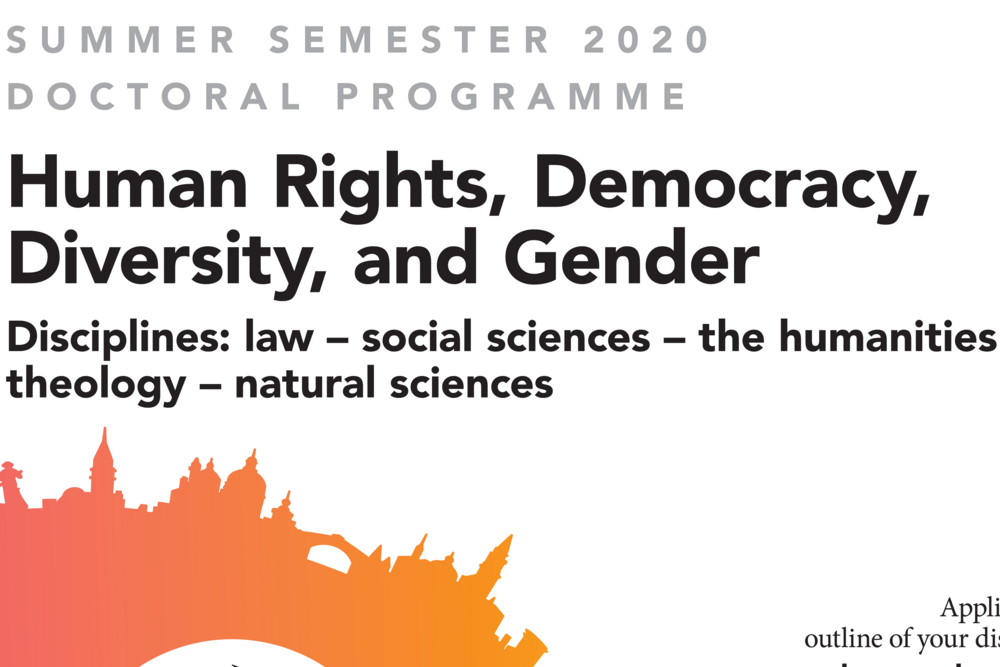
Students and faculty participating in the Interdisciplinary Doctoral Programme in Human Rights, Democracy, Diversity and Gender completed a successful semester despite COVID-19 measures and online learning requirements.

Students and faculty participating in the Interdisciplinary Doctoral Programme in Human Rights, Democracy, Diversity and Gender encountered a significant challenge in their participation in the Summer Semester 2020. Designed to provide faculty and doctoral students from all seven faculties of the University of Graz with the opportunity to present and receive varied, multi-perspective feedback on their work, the course relies heavily on discussion and opportunity to interact – no small feat in the times of COVID-19 and online learning. That these problems presented themselves did not deter anyone this semester, as all participants rose to the challenge and were even more engaged than usual.

Lead by Prof. Dr. Wolfgang Benedek, the almost weekly sessions were held without greater problems, allowing two or three faculty members and students each session to showcase their work. Presentations by all participants proved to be of the highest quality and covered a broad range of topics, from current issues relating to COVID-19 and human rights, nationalism, and climate change, to foundational topics related to the effects of language, such as the generic masculine or translation proceedings, to developed historical perspectives on the rights of indigenous persons in Brazil, refugees’ rights in Europe, or the Austrian Islam Law. That the course was held using online tools did not deter from lively and stimulating discussions, which participants noted were extremely helpful.

Additionally, this semester saw the involvement of two doctoral students involved in the moderation and hosting of sessions. Elshaday Woldeyesus and Girum Gebremariam, PhD students at the Uni-ETC and the Institute of International Relations at the Law Faculty, respectively, and members of the Doctoral Programme in Law and Politics, not only presented their work to their colleagues and faculty, but moderated the presentation and follow-up discussion during two sessions. Their skillful refereeing facilitated a productive discussion and conversation during these sessions.

The only saddening aspect of the programme this year was that due to the COVID-19 concerns, the annual workshop at the Monastery of San Nicolo at the Lido, Venice, that also hosts the Global Campus of Human Rights with which the Uni-ETC has a long-standing partnership, had to be cancelled. The workshop normally gives the participating students and faculty a chance for not only inter-university, but also inter-institutional exchange, as the workshop is open to students and faculty from other partner universities and centres. Still, Prof. Dr. Benedek noted an overall positive response to the course from all faculties despite the challenges and noted in the last session his great appreciation for the outstanding engagement of all participants.

The Doctoral Programme will be continued in the next summer semester 2021. Interested doctoral students are encouraged to check the Uni-ETC website towards the end of the Winter Semester 2020/21 for more details on how to participate.

Weitere Artikel

Law from the Machine?

In ancient Greek, apò mēkhanês Theós (more well-known in Latin as "Deus ex machina") describes the way mythological figures appeared in theaters seemingly from thin air, instantly influencing the plot. Today, Artificial Intelligence might exert similar effects in legal proceedings. Students from our faculty are currently taking a deep dive into this matter in a human rights moot court competition, inter alia, in Greece - and they are doing so with great success.

FreeAC: online workshop "Communicating Instruments and Strategies for Academia"

On 10 March 2026, the European Training and Research Centre for Human Rights and Democracy at the University of Graz hosted an online workshop “Communicating Instruments and Strategies for Academia” within the Erasmus+ project “Promoting Academic Freedom in Ukraine (FreeAc)”

FreeAc: online workshop "Supporting Veteran Transition into Higher Education"

On 6 March 2025, the European Training and Research Centre for Human Rights and Democracy at the University of Graz hosted an online workshop titled “Supporting Veteran Transition into Higher Education” within the Erasmus+ project “Promoting Academic Freedom in Ukraine (FreeAc)”.

Call for Papers: Human Rights Cities Against Authoritarianism and Populism

Call for Papers for the 11th Human Rights Paper Session as a part of the World Human Rights Cities Forum (WHRCF) held in Gwangju, South Korea from the 13th to the 15th of May 2026

Beginn des Seitenbereichs:
Zusatzinformationen:

Universität Graz
Universitätsplatz 3
8010 Graz
  • Anfahrt und Kontakt
  • Kommunikation und Öffentlichkeitsarbeit
  • Moodle
  • UNIGRAZonline
  • Impressum
  • Datenschutzerklärung
  • Cookie-Einstellungen
  • Barrierefreiheitserklärung
Wetterstation
Uni Graz

Ende dieses Seitenbereichs. Zur Übersicht der Seitenbereiche

Ende dieses Seitenbereichs. Zur Übersicht der Seitenbereiche

Beginn des Seitenbereichs:

Ende dieses Seitenbereichs. Zur Übersicht der Seitenbereiche