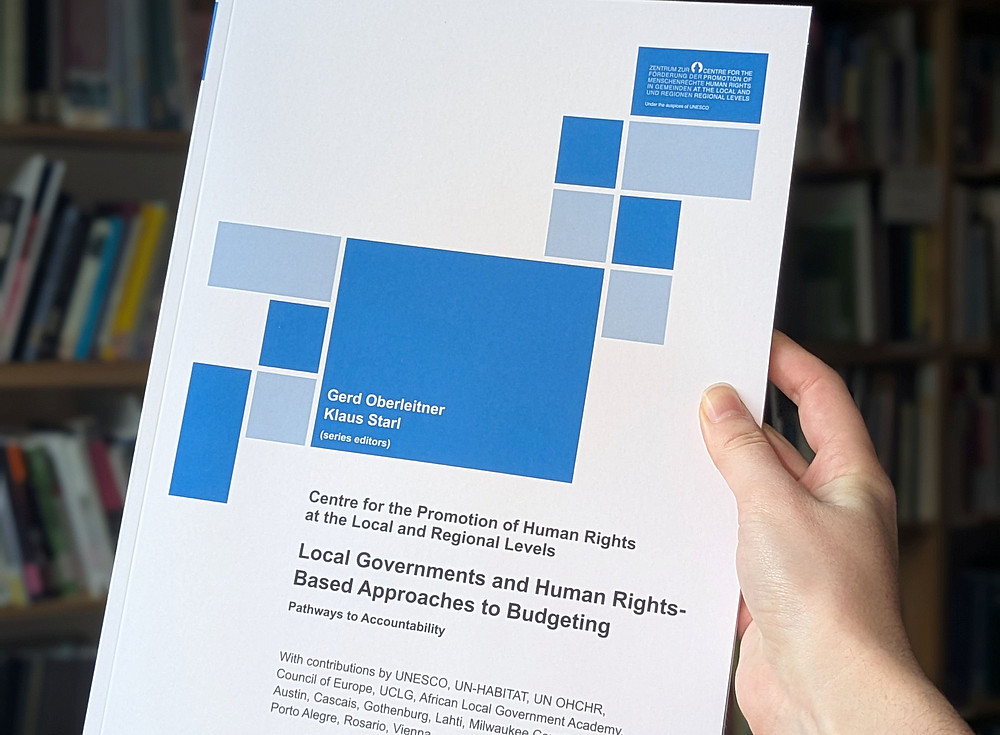
Volume 6 of the Human Rights Go Local paper series focuses on human rights-based approaches to budgeting as an essential tool for fostering accountability. Budgets are a key instrument through which governments allocate resources to fulfil human rights obligations. Local governments, with their direct impact on public service delivery and resource distribution, play a crucial yet still underexplored role in realising a Human Rights Economy. By integrating human rights principles and standards into all stages of the budget process local authorities can ensure that fiscal decisions align with human rights standards. This approach not only strengthens oversight and transparency but also creates tangible mechanisms to monitor government performance and ensure accountability for human rights outcomes. Consequently, human rights-based budgeting serves as both a tool and a framework to hold local governments accountable for their commitments.
What is the purpose of this publication?
This publication wants to equip local governments and their partners with the practical knowledge, tools, and inspiration needed to embed human rights principles into budgeting processes. It seeks to bridge the gap between theory and practice by offering guidance on how to design, implement, and monitor budgets that advance human rights while strengthening accountability and transparency. By highlighting real-world experiences and lessons from cities and international organisations, the book demonstrates how local authorities can operationalise the concept of a Human Rights Economy. Ultimately, it aims to support municipalities at different stages of development in building fiscal systems that respect, protect, and fulfil human rights for all.
Target groups
“Local Governments and Human Rights-Based Approaches to Budgeting: Pathways to Accountability” is designed for a broad audience of practitioners and professionals working in or alongside local governments, regardless of their prior experience with human rights-based budgeting. It is particularly targeted at local government actors involved in policy-making and public administration, city networks, and intermediary organisations such as think tanks or professional associations. Human rights professionals from academia, civil society, and regional or international organisations will also find practical guidance and relevant frameworks in this publication. Additionally, the book serves as a resource for those seeking to develop or deepen their practical expertise in implementing and advancing human rights approaches within local budgets at different stages of development or adoption.
Practical examples in the book
Local governments worldwide have increasingly adopted human rights-based approaches to budgeting, offering valuable inspiration and exemplary practices for others. The book highlights diverse local experiences, showing the global adaptability of these approaches, providing readers with inspirational models to guide implementation:
- Cities and local authorities: Austin (United States), Cascais (Portugal), Gothenburg (Sweden), Lahti (Finland), Milwaukee County (United States), Naga City (Philippines), Porto Alegre (Brazil), Rosario (Argentina), Vienna (Austria)
- Scholarly case studies: Wonosobo Regency and Singkawang City (Indonesia), Medellín (Colombia), Kenya, and Cambodia
Follow this link to purchase the publication!