Begin of page section:
Page sections:

  • Go to contents (Accesskey 1)
  • Go to position marker (Accesskey 2)
  • Go to main navigation (Accesskey 3)
  • Go to sub navigation (Accesskey 4)
  • Go to additional information (Accesskey 5)
  • Go to page settings (user/language) (Accesskey 8)
  • Go to search (Accesskey 9)

End of this page section. Go to overview of page sections

Begin of page section:
Page settings:

English en
Deutsch de
Search
Login

End of this page section. Go to overview of page sections

Begin of page section:
Search:

Search for details about Uni Graz
Close

End of this page section. Go to overview of page sections


Search

Begin of page section:
Main navigation:

Page navigation:

  • University

    University
    • About the University
    • Organisation
    • Faculties
    • Library
    • Working at University of Graz
    • Campus
    Developing solutions for the world of tomorrow - that is our mission. Our students and our researchers take on the great challenges of society and carry the knowledge out.
  • Research Profile

    Research Profile
    • Our Expertise
    • Research Questions
    • Research Portal
    • Promoting Research
    • Research Transfer
    • Ethics in Research
    Scientific excellence and the courage to break new ground. Research at the University of Graz creates the foundations for making the future worth living.
  • Studies

    Studies
    • Prospective Students
    • Students
  • Community

    Community
    • International
    • Location
    • Research and Business
    • Alumni
    The University of Graz is a hub for international research and brings together scientists and business experts. Moreover, it fosters the exchange and cooperation in study and teaching.
  • Spotlight
Topics
  • Sustainable University
  • Researchers answer
  • Work for us
Close menu

End of this page section. Go to overview of page sections

Begin of page section:
You are here:

University of Graz Faculty of Law European Training and Research Centre for Human Rights and Democracy News How inclusive is your city?
  • About the Centre
  • UNESCO Chair
  • Research
  • Teaching
  • News
  • Events

End of this page section. Go to overview of page sections

Monday, 24 February 2020

How inclusive is your city?

Credit: Karina Gomes

Credit: Karina Gomes

Credit: Karina Gomes

Credit: Karina Gomes

Credit: Karina Gomes

Credit: Bernadette Knauder

Credit: Karina Gomes

Credit: Karina Gomes

Credit: Karina Gomes

Credit: Karina Gomes

Credit: Karina Gomes

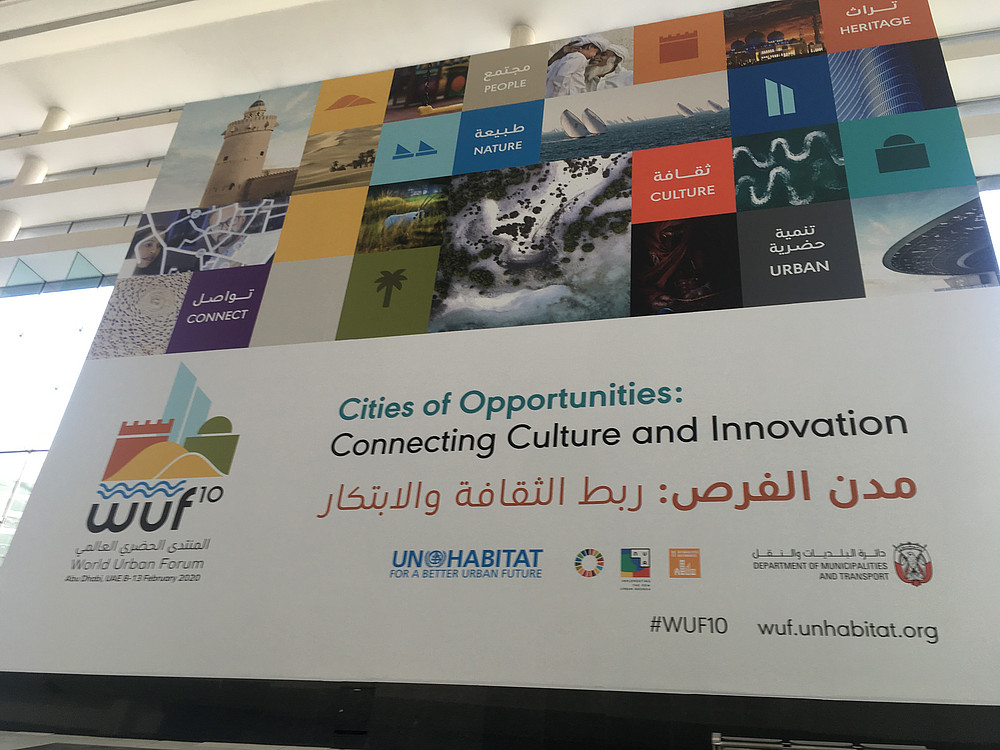
Toolkit and book launch at the 10th World Urban Forum in Abu Dhabi

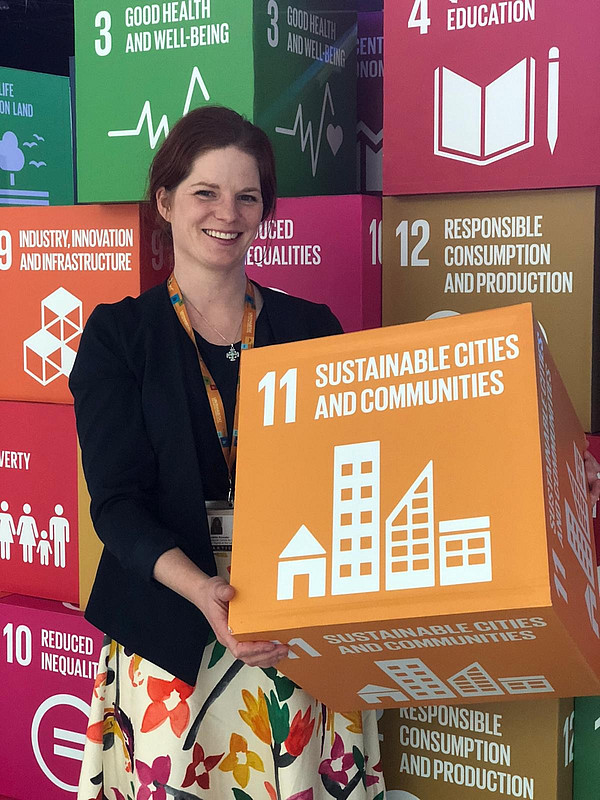
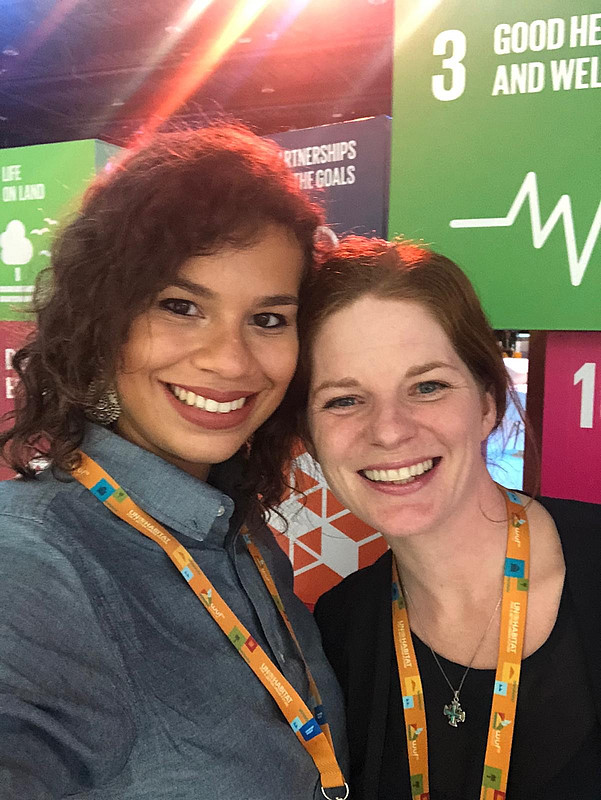
Cities and local authorities are the linchpin when it comes to addressing global challenges such as poverty, inequality, climate change and conflict. Indeed, “[t]he sustainable development fight will be won or lost in our cities” – this was the sentiment of the 10th World Urban Forum which took place in the United Arab Emirates in February 2020. The World Urban Forum has become the foremost international gathering for stakeholders from all spheres to exchange views and experiences on how to “ensure that cities are inclusive, safe, resilient and sustainable” (SDG 11). Every year, the dynamic forum brings together over 13.000 researchers, government representatives, mayors, private sector and civil society actors from more than 168 countries to generate momentum on how to realize and guarantee sustainable urbanization in all its ramifications.

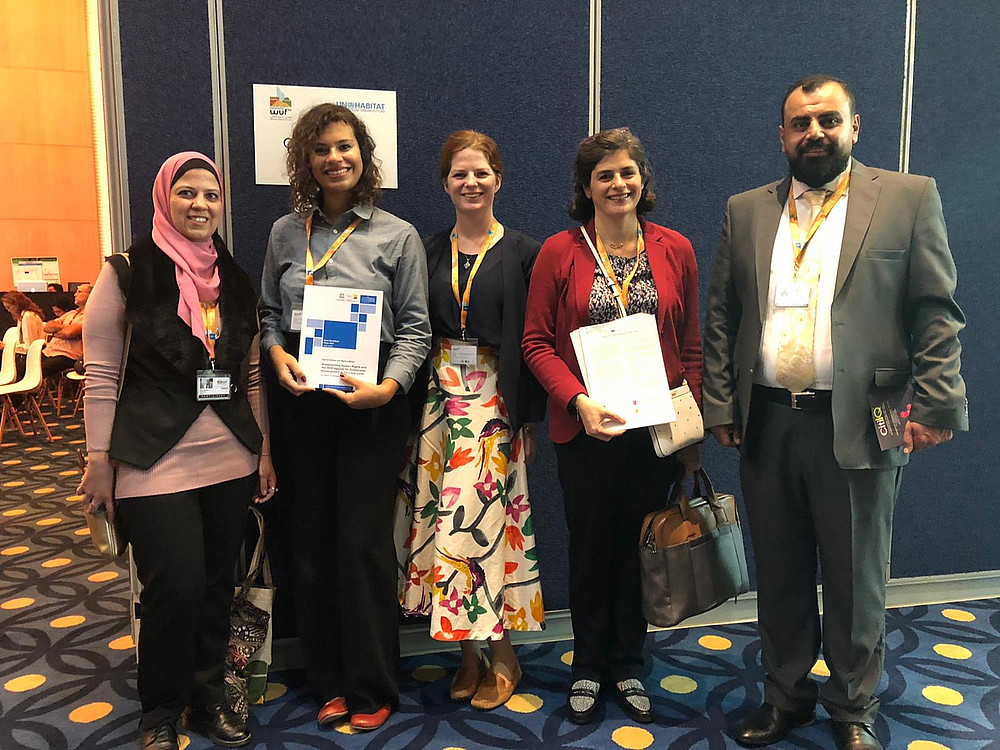
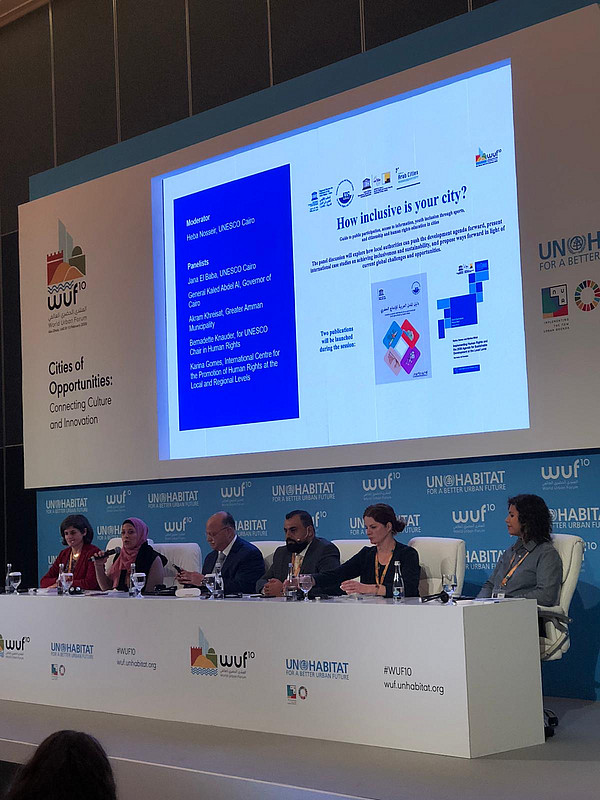
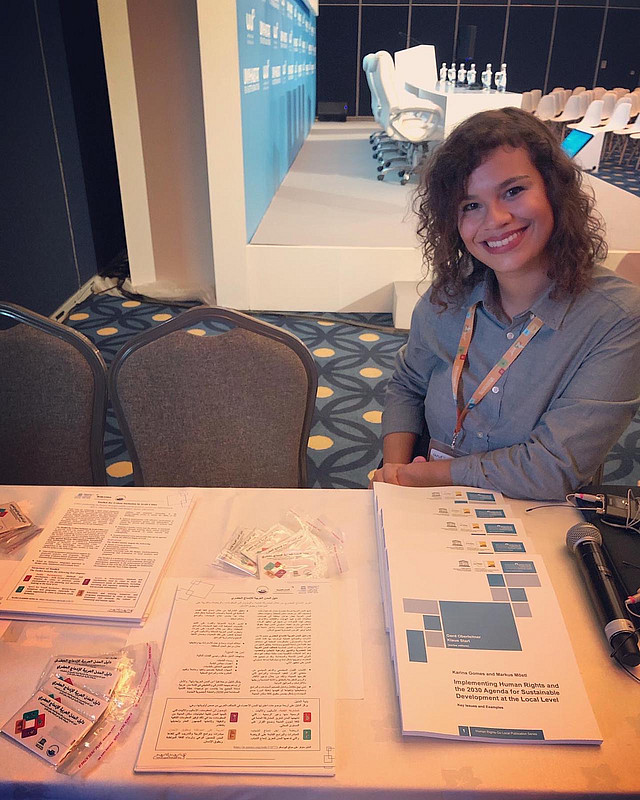
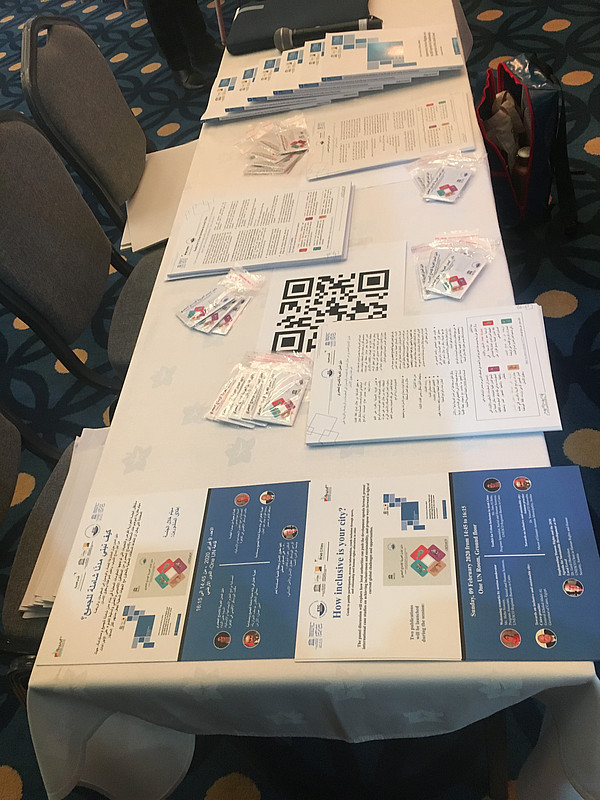
The UNESCO Chair in Human Rights and Human Security and the UNESCO Centre for the Promotion of Human Rights at the Local and Regional Levels joined the 10th World Urban Forum and organized a panel entitled “How inclusive is your city?” together with the mayors of Cairo (Egypt) and Amman (Jordan) as well as representatives of UNESCO Cairo. The panel addressed how local authorities and particularly cities can contribute to achieving sustainability and inclusiveness, and introduced two joint publications offering insight and guidance.

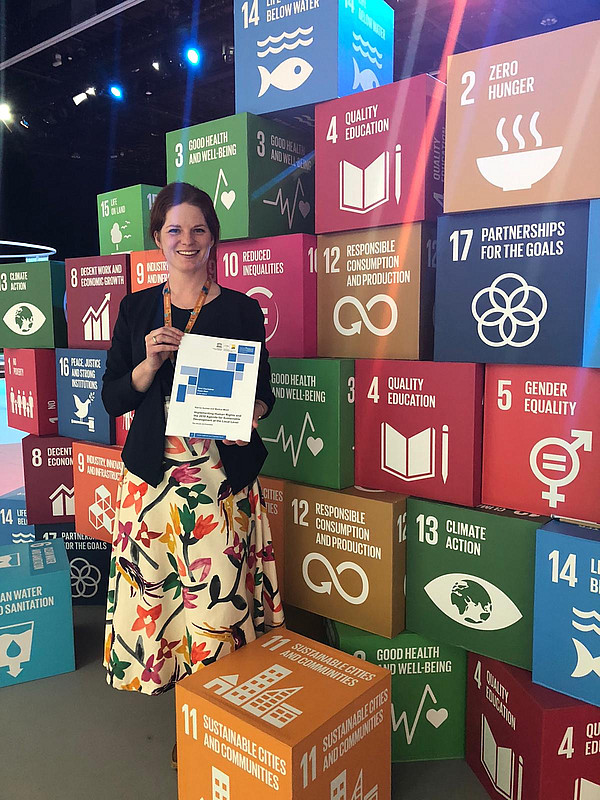
The Toolkit for Urban Inclusion in Arab Cities, prepared under the umbrella of the Coalition of Arab Cities against Racism, Discrimination, Xenophobia and Intolerance, presents policy models and hands-on guidance covering topics of high relevance to cities in the Arab region: these include public participation, access to information, sports for youth inclusion, and citizenship and human rights education. The methods introduced help local authorities conceptualize, implement and evaluate efforts in these areas to promote inclusive urban development.

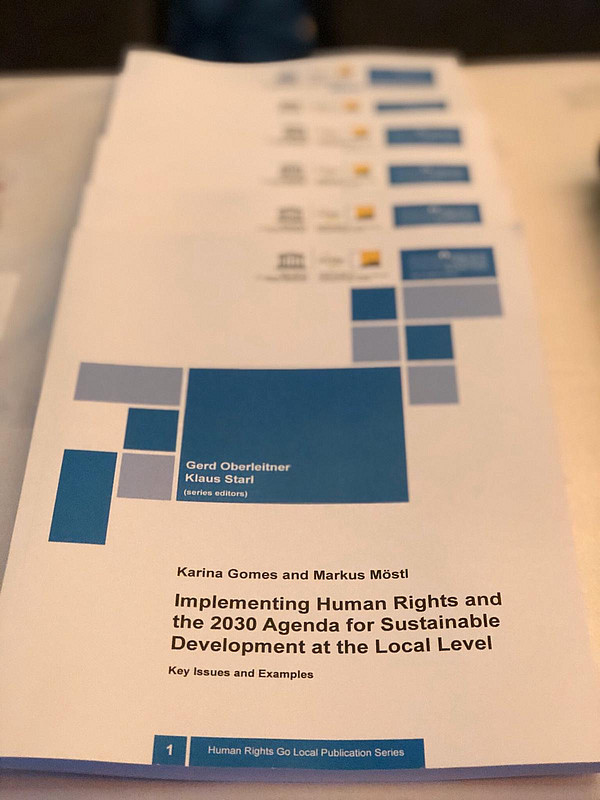
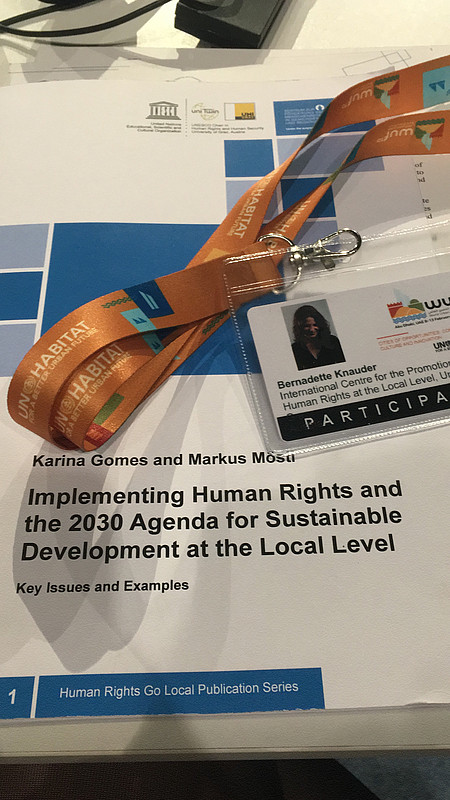
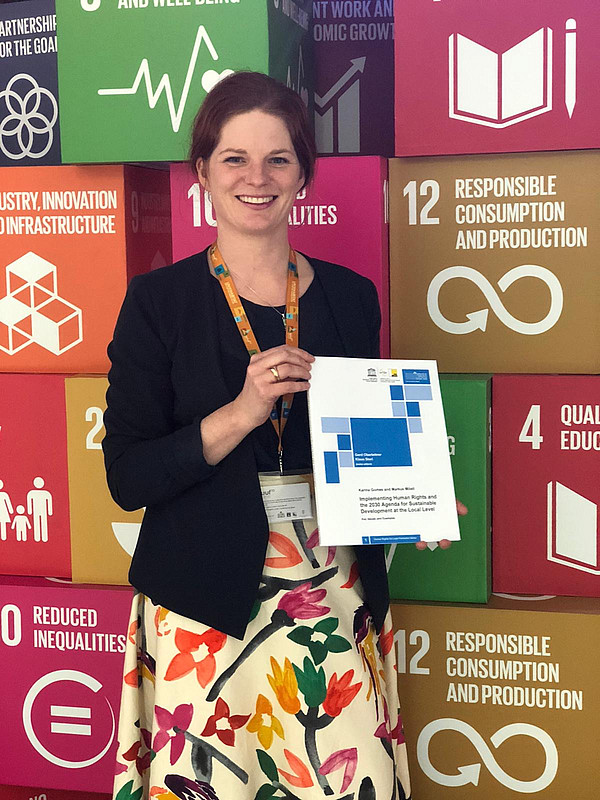
The study Implementing Human Rights and the 2030 Agenda for Sustainable Development at the Local Level is the first volume of the Human Rights Go Local Publication Series that is jointly edited by the UNESCO Centre for the Promotion of Human Rights at the Local and Regional Levels and the UNESCO Chair in Human Rights and Human Security. The publication series is devoted to understanding and promoting human rights at the local level within global frameworks such as the SDGs and the New Urban Agenda (NUA). The series will allow researchers and practitioners to reflect on the connection between legal frameworks, policy frameworks and practices, and will showcase how these interlinkages can guide us in creating inclusive, resilient, safe and sustainable cities.

Related news

Padova Model UPR 2025

Students from University of Graz win second place in two categories at the Model UPR simulation hosted by University of Padua

Call for Registration: 5th Academy and Conference Human Rights Go Local

We cordially invite you to register for the multi-day online participatory forum “Human Rights Go Local: What Works”. The 2026 edition will scrutinize human rights-based budgeting approaches regarding their effectiveness to promote local governments’ accountability. We will discover how these budgeting approaches can serve to make human rights a reality for all.

FreeAc Lecture Series: Circular Economy for Sustainable Development

On 16 December 2025, within the Erasmus+ project Promoting Academic Freedom in Ukraine, coordinated by the University of Graz, a guest lecture by Ukrainian scholar Dr. Kateryna Nesterova took place as part of the Ukrainian Voices lecture series.

Ukrainian study group explores human rights localisation in Graz

Begin of page section:
Additional information:

University of Graz
Universitaetsplatz 3
8010 Graz
Austria
  • Contact
  • Web Editors
  • Moodle
  • UNIGRAZonline
  • Imprint
  • Data Protection Declaration
  • Accessibility Declaration
Weatherstation
Uni Graz

End of this page section. Go to overview of page sections

End of this page section. Go to overview of page sections

Begin of page section:

End of this page section. Go to overview of page sections